
Packing a Library – Part Three: Trains, Street Food and the Modern Traveller
Paul Theroux and Anthony Bourdain

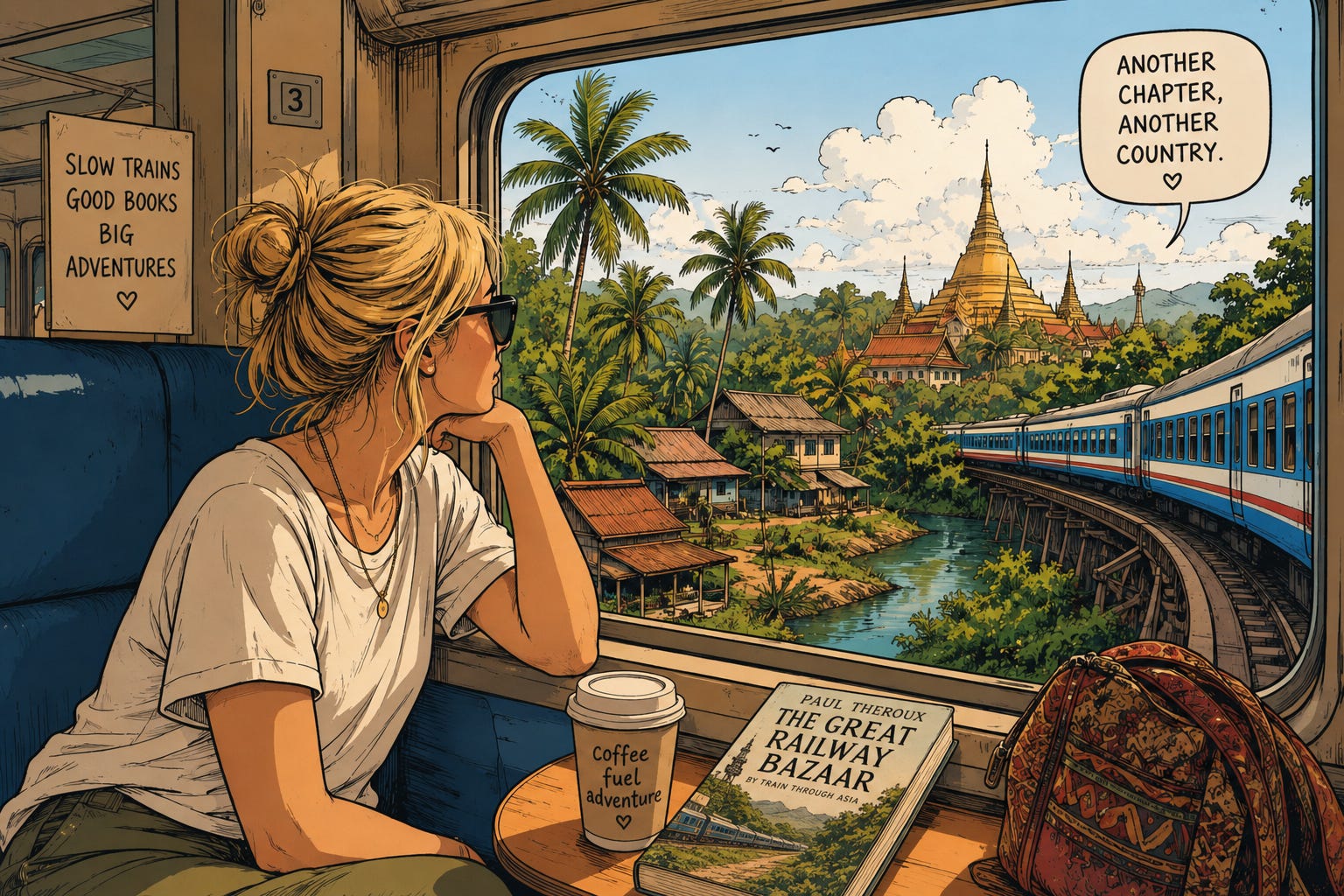
In the previous parts of this series, the writers arrived by steamship. But Anthony Bourdain and Paul Theroux inhabited different worlds. Bourdain usually arrived with a camera crew. Paul Theroux preferred trains.
By the time Theroux set off on the journey that became The Great Railway Bazaar (1975), Southeast Asia had entered a new era.
What fascinates me about Theroux is that he wasn’t searching for famous landmarks or postcard views. He paid attention to railway compartments, station cafés, fellow passengers and the conversations between strangers.
One of my favourite stories takes place in Burma (now Myanmar), where Theroux spends days rattling north through the countryside on trains with wooden benches and broken windows. Along the way he falls into conversation with a Burmese gentleman who seems to belong to another age. Like so much of The Great Railway Bazaar, the destination almost becomes secondary. It is the chance encounters that make the journey unforgettable.
The other memorable moment is his determination to cross the Gokteik Viaduct. At the time, foreigners were not supposed to go there. Theroux boarded the train anyway, and after reaching the viaduct, he was escorted back by soldiers and warned not to try it again. One has to love his sense of adventure.
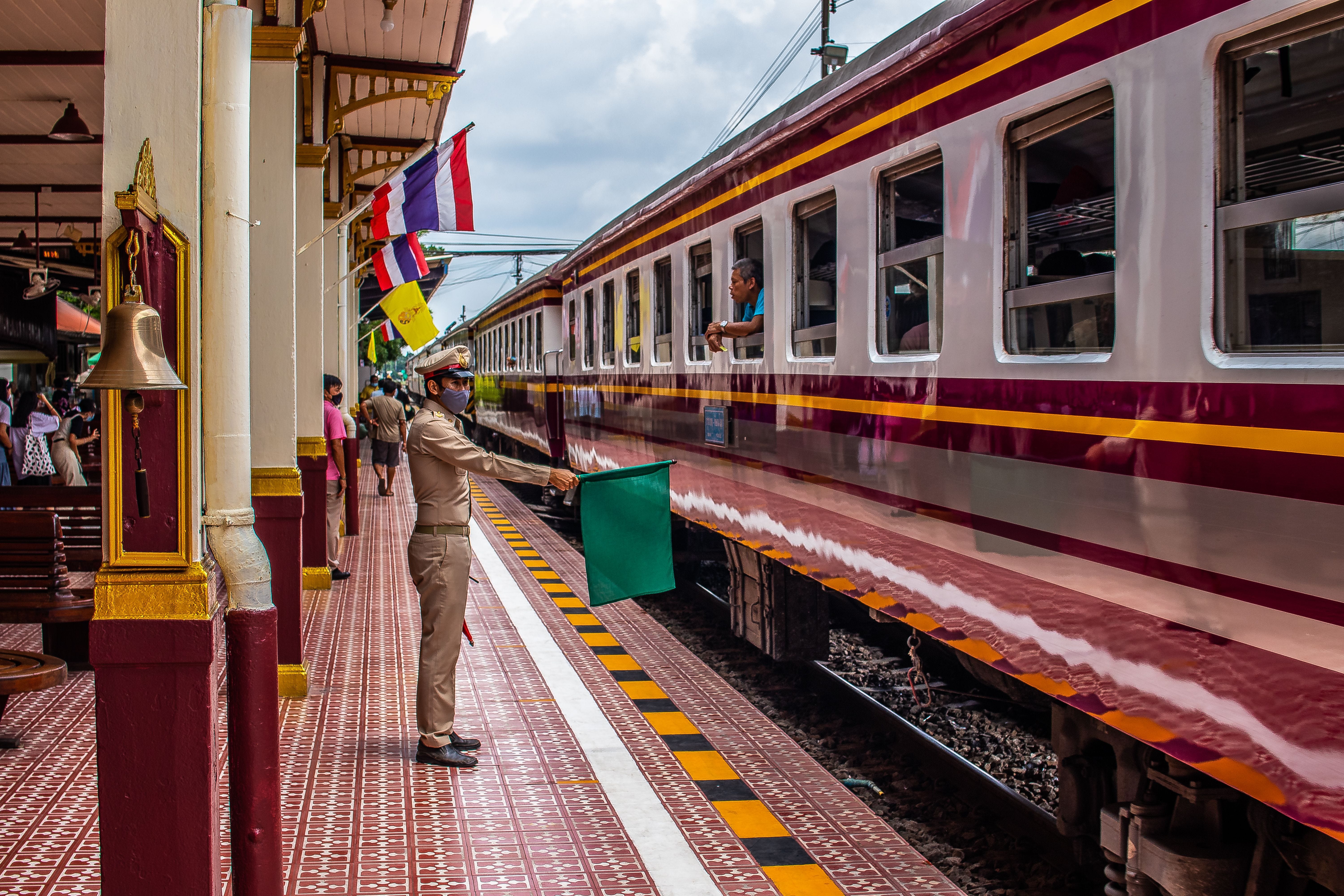
He described Bangkok as a place of relentless heat, traffic and noise, almost as though it had been designed for travellers passing through rather than for those who lived there. In some ways, Bangkok is still a city of transients. But it is also a city that has constantly reinvented itself, where ancient temples stand beside skyscrapers and river ferries still weave between luxury hotels.
Singapore stirred more complicated emotions. Theroux had lived there in the late 1960s, taught there and written some of his earliest books. Returning years later, he admired its efficiency but worried that rapid modernisation was erasing the character of the old colonial port he had once known.
If Theroux taught me to look out of the train window, Anthony Bourdain taught me to pull up a plastic stool, order whatever the locals were eating and start a conversation.
Food was his excuse for travelling, but people were always his real subject. He believed that the quickest way to understand a place was to sit down, share a meal and listen. Although best known for television, he was, at heart, a gifted storyteller whose episodes had the observational depth of the finest travel essays.
In Chiang Mai, he wandered the markets with chef Andy Ricker, stopping at humble stalls where enormous pots of pork had been simmering since dawn. Bourdain loved these kinds of places—unassuming street stalls where a recipe had been perfected over generations. He had a knack for making readers (and viewers) appreciate the patience and craftsmanship behind seemingly simple food.
As the day went on, they not only enjoyed food but also plenty of drinks. That mix of curiosity, humour and the occasional late-night excess was classic Bourdain.
I think Bourdain inspired an entire generation of travellers to see Southeast Asia differently. He changed the way we think about street food — as a window into culture, history and community.
Looking back, it’s striking how the focus of travel writing has shifted. Conrad, Kipling and Maugham wrote during the age of empire. Greene witnessed that world beginning to unravel. Theroux travelled through newly independent nations, while Bourdain sought conversations over a shared meal.
Over the years I too have travelled on many trains, sat on countless plastic stools with a cold beer and something to eat, and experienced some of the greatest adventures of my life. The region has a remarkable ability to change how you think about travel—and about life itself.
If these essays encourage someone to slip one of these books into their backpack before setting off, then they will have done exactly what I hoped they would.
Also read:


Thanks for reading! Subscribe for free to receive new posts.
The train is still my preferred mode of travel in Thailand. It's inexpensive, often more convenient because the train stations are downtown, and as you described in your post, much more romantic. My usual is the #261, with a daily departure at 0920 from the old Hua Lamphong in Bangkok to Hua Hin. It's slow, not terribly comfy (third class only), often hot (fan only), and dusty, but I love it, and at 44 baht per person, it's still a real bargain. No reservations needed (and no reserved seats either). Just turn up and buy a ticket. The food vendors working the aisles between stations will keep you entertained (and well fed). By the way, when I was at Hua Lamphong in June, I noticed that several more food stalls had re-opened. It's still a far cry from the golden era of backpacking, when the station was overflowing with food choices, but options continue to increase. Cheers.
Really enjoyed the essay, Marita. What great role models to choose as subjects. I’ve experienced the fun of rail trail in Asia: Thailand (Bangkok to Chiang Mai) and Malaysia to Singapore overnight and would love to do more. Bourdain is one of my heroes. I spent a summer working in a Cape Cod kitchen - which was also one of his formative experiences- but while I went on to be an ok cook, he became a great chef and famous travel writer. 😂